

Introducing the 去冰! Study Group
A project to co-create a Taiwanese American community response to ICE and carceral violence in the United States. Like a group hug for our brains and hearts. With arts and crafts.


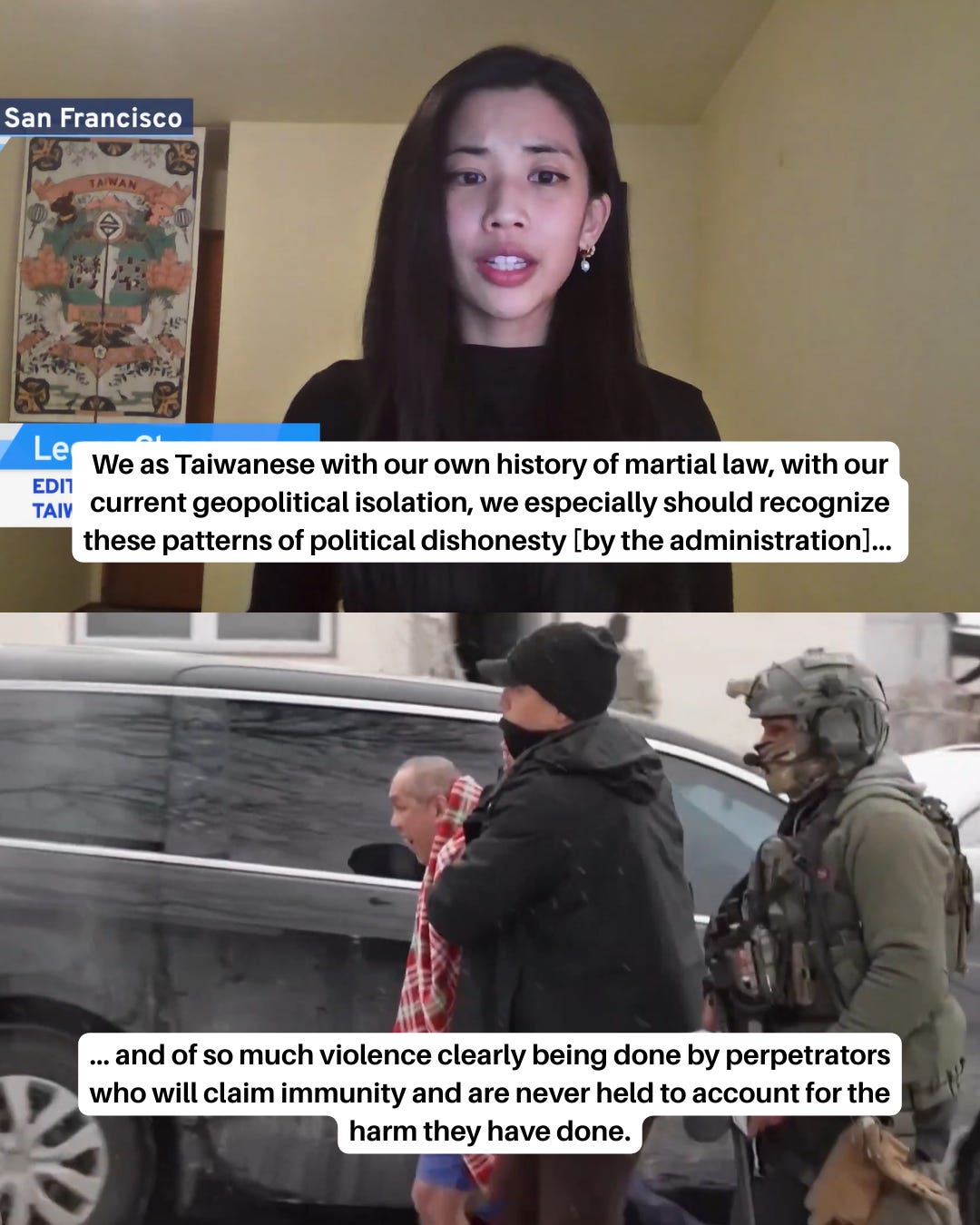
Hi dear friends!
I’m so glad you’re here. In the past few days/years, I have experienced for myself and heard so many observations of dissonance from all of you. I hope through this project we can build a container for that dissonance — in part so we can study its ingredients, but more so that it does not bleed as a corrosive agent into our relationships, our sense of dignity, and our endurance.
In this study group, we’ll be exploring the connective tissues between ICE under the Trump Administration and the Garrison Command under Chiang Kai-shek/the KMT’s White Terror period. In short, we will figure out, together: what are the political legacies I have inherited, and how do they inform my political commitments?
I believe we’ll find in history that there was always precedent and thus always hope for transformation and self-determination, even in terrifying circumstances.
Some loose frameworks I’m noodling on:
- State narratives of threat & containment (“illegal aliens,” “migrant invasions” vs. “Communists,” “traitors,” “seditionists”)
- Legality + violence (detention without trial, deportation without due process, military tribunals, “thought crimes”)
- Bureaucracy as violence (agents, contractors, informants, blacklists; who feels responsible vs. who takes responsibility; who authorizes harm vs. who carries it out)
- Surveillance & social rupture (family separation, hostages, informants, citizen-observers)
- Mass mobilization (in real time) + memory (how violence is resisted, remembered, distorted, or erased)
- Rhetoric used to rationalize violence (“terrorists,” “leftist radicals” vs. “containing Communist threats”)
Some guiding principles I’m thinking of (and I’d love to hear yours — this is your space, too!)
Relation over comparison
Fundamentally, our goal will be to relate, not compare! Rather than distinguish these in academic terms, I’ll share an example of the emotions at stake:
I can already anticipate that comparing the Minneapolis protests to 228 will cause significant distress— rightfully so! My elder-activists might say: What is happening in Minneapolis now is not nearly the same as what we suffered in Taiwan. While there have been instances of violent suppression in the United States, public dissent remains broadly possible, and the government—however imperfectly—can still be challenged and held to account. 228 unfolded under martial law, under total control of information and speech, and families were left for decades without knowing why their loved ones were disappeared, or where they might be buried. Treating these events as comparable hurts me because it feels like you are minimizing the depths of terror inflicted, the lack of agency we had, the invisibility we suffered on a global scale, and the scale of how an entire generation of intellectuals was targeted, prosecuted, and annihilated.
Instead, I want an approach through which my elders see that their experiences and stories have been so formative for me that they are threaded through how I understand all struggles. To relate histories is to say: I have recognized the injustices you endured, and because of that recognition, I feel called to witness how familiar patterns of power, fear, and punishment show up in the lives of my friends and neighbors today. I honor our history best by applying its learnings in service to all communities.
Direct comparison also risks a false logic tethering similarities of consequence to similarity of conduct. The DHS, for example, deflects comparisons between ICE and the Gestapo by emphasizing asymmetries of scale, intent, and historical context between the present-day United States and the Holocaust. This maneuver allows them (and complicit individuals/institutions) to sidestep more appropriate scrutiny of nascent tactics and behaviors (administrative opacity, inflammatory categorization, narrative dishonesty) that have preceded mass violence in many regimes.
Jewish public historians have also cautioned against treating the Holocaust as a metaphor or benchmark for atrocity, noting that these comparisons can collapse specificity and obscure the United States’ own histories of state violence. I am inspired by the way they practice moral vigilance, and hope to apply this to our study of Taiwanese history so that we can recognize how violence takes root, and to learn from multiple historical inheritances without instrumentalizing any of them. I hope we’ll navigate this together with grace and sensitivity.
I feel tempted to frame this multigenerational, transnational study group as a reconciliatory tool, something that might help bridge divides between family members or friends who do not share our specific politics (ahem!!!). But I also recognize and have experienced the flaws of that promise. For all my best efforts and all the community equity I (think I) have, I do not know if I have ever changed anyone’s mind. What I do know is that I am surrounded by people who love me, and who remain curious about my beliefs because they understand those beliefs as an extension of who I am.
My hope is that this curiosity can lead us to celebrate moments of self-determination rather than punish the distance between our ideals and the people in our lives; and that relational thinking can help us stay connected, even when consensus does not feel possible.
Co-creating a community response
I am always so grateful but so anxious and overwhelmed whenever I am asked to articulate a perspective “representing the Taiwanese American community.” Each time, I’m reminded that some of my views are unpopular, and often do not reflect what might be considered a majority position. I also struggle when these statements are edited of their nuance. I understand why my nervous disclaimers don’t translate well into soundbites, but the inability to fully explain myself leaves me feeling exposed and unprotected. (Plus, people are unkind on the internet and I am thin-skinned).
Thus this cozy little space will focus on co-creating an ongoing, embodied response; not drafting a statement by consensus. I want to focus more on documenting how we learn together, and from what materials, questions, and relationships. I’ve often lamented that our elder-activists were such prolific authors of manifestos, but did not usually cite their uncertainties or unresolved debates. This project is meant to archive our generation’s rich gray space of wondering and wandering. Maybe we’ll make a zine, and maybe it will just be full of questions!
What we’ll be doing:
I envision this as a series of shared readings and materials; drawing from academic writing, abolitionist frameworks, online courses, perspectives from Minnesota, and archival material from the Taiwanese American elder-activist community (in particular, the zines/pamphlets of the first generation!) There will be readings organized for self-study, as well as online yaps and in-person debriefs/workshops for those in the Bay Area. I would also truly love to co-create a digital and/or printed zine!!
I already have some ideas in mind, as well as inputs planned from more intellectual heavyweights in our community.
Together, we might create chosen ancestor family trees to archive our various political and intellectual influences; or annotate our own captions for Taiwanese Independence political cartoons (and then learn about their original context/content); or learn about the cross-pollination between American and Taiwanese/ROC para-militaries. We might create collages of all the unhinged things dictators say to rationalize violence. We might write poems and put cross-movement protest hymns in conversation. We can do whatever you want to get what you need!
If this resonates with you, please fill out the survey and/or leave a comment! I’d love to know what’s on your mind, what you’d like to contribute, or how we can support you.
I’m also literally just a girl with very limited bandwidth and expertise, so if this is something you’d like to help facilitate, I would be so grateful.
With so, so, so much love and hope—
Leona
*I am like so mortified that this could be misconstrued as a grab for subscribers/a scheme to personally benefit but this whole initiative is not monetized and none of my work exists behind a paywall! I just cannot fathom having another platform/modality to manage! Sorry and thank you!
Mandarin summary (thank you, mom!):
這個計畫是要邀請一個跨世代、跨國的學習小組,以*關聯性 (而非直接比較!!) 出發,探討川普政府時期的 ICE 與臺灣白色恐怖時期的警備體系所展現的國家暴力,藉此思考我們所繼承的政治歷史如何形塑當下的政治承諾。本計畫並非要為苦難排序,也不是將不同的歷史經驗簡化或混為一談,而是透過研究反覆出現的手段——如將人群犯罪化的敘事、官僚體制中的暴力、監控,以及掩蓋——來培養道德警覺,同時尊重每一段經驗的特殊性與深度。這個空間重視關係、關懷與好奇心,勝於追求共識,並強調共同學習、紀錄與創意探索(把炙熱的政治憤怒與一點俏皮與想像力編織在一起!),作為我們在政治張力與分歧之中,依然能彼此連結、保有尊嚴,並對彼此負責的方式。
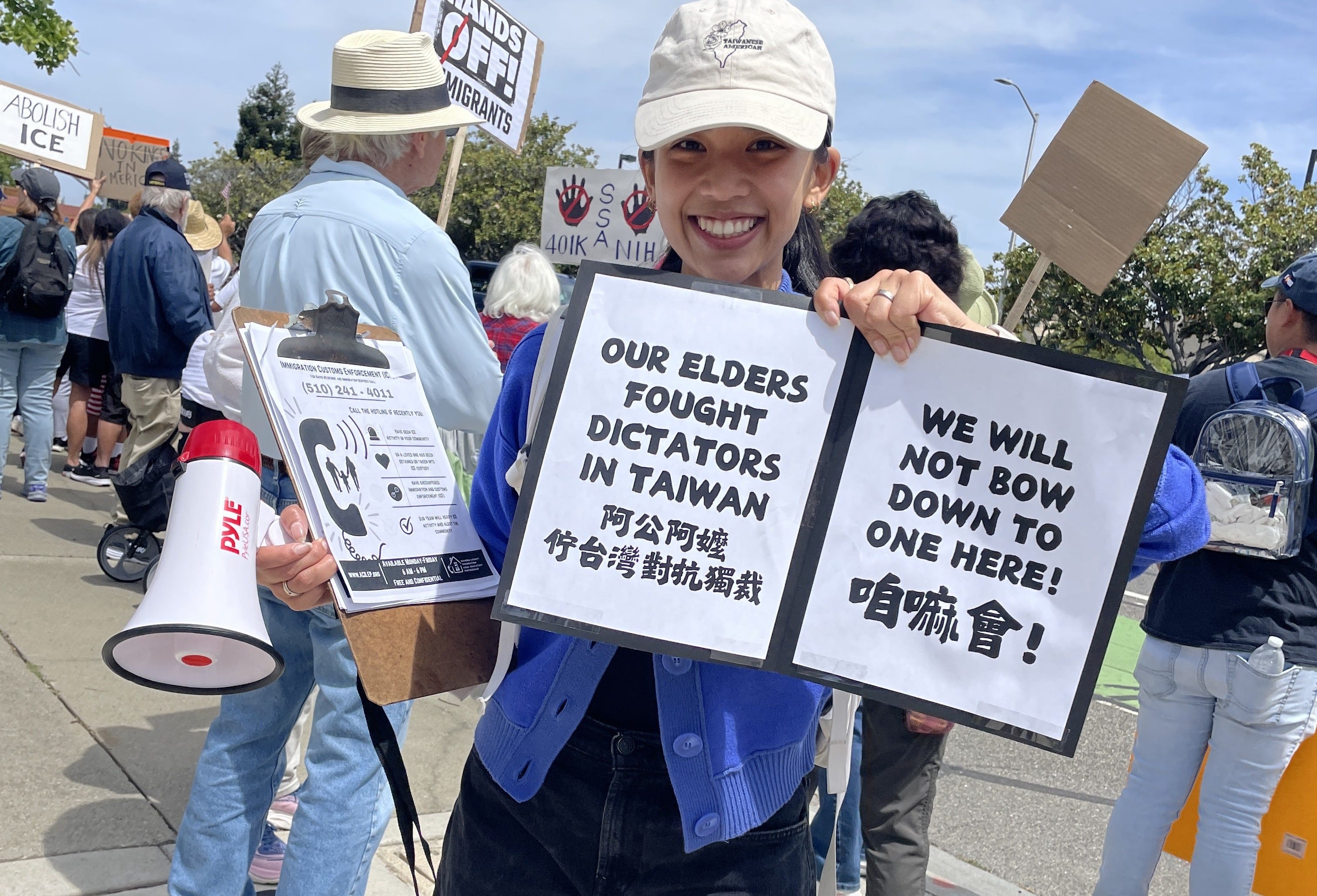
Thanks so much for all that you do, Leona! You're amazing.
Wait, 去冰 is AMAZING as a name for this project though 😂